 blog
blog
Best Fabrics for Custom Printing: A 2026 Guide
Table of Contents
- Why Fabric Choice Matters for Custom Printing
- Cotton vs Polyester for Printing: Strengths and Trade-offs
- Best Fabrics for DTF Transfers and Direct-to-Garment Methods
- Natural vs. Synthetic Fibers: What Works Best for Each Printing Technique
- Printing Techniques for Different Materials: Screen Printing, HTV, and Sublimation
- Fabric Weight, GSM, and Durability Factors That Affect Print Quality
- Eco-Friendly and Sustainable Fabric Printing Options
- Troubleshooting Print Failures by Fabric Type
- Frequently Asked Questions
Last Updated: September 30, 2026
Why Fabric Choice Matters for Custom Printing
Selecting the right fabric is the foundation of successful custom printing. The wrong choice leads to faded designs, peeling transfers, and disappointed customers.
The fabric you choose affects how ink adheres, how heat transfers bond, how colors hold up to washing, and how the final garment feels. Understanding these differences separates professional results from amateur mistakes.
This guide covers the best fabrics for custom printing across different techniques, fiber types, and use cases, ensuring quality that lasts.
Cotton vs Polyester for Printing: Strengths and Trade-offs
Cotton and polyester dominate custom apparel for good reason. Each has distinct advantages depending on your printing method and end use.
Cotton offers natural breathability and comfort, with excellent ink adhesion for screen printing because the fabric's absorbency allows ink to bond deeply into the fibers. Ring-spun cotton produces softer garments with superior print quality.
The downside: cotton shrinks, wrinkles easily, and fades faster than synthetics. Cotton requires careful heat management during printing to avoid fiber damage.
Polyester resists shrinking and fading, maintaining color fastness through repeated washing. It works exceptionally well with heat transfer vinyl and sublimation printing.
The trade-off: polyester doesn't breathe as well as cotton and requires precise temperature control, too much heat melts fibers, too little leaves transfers weak and peeling.
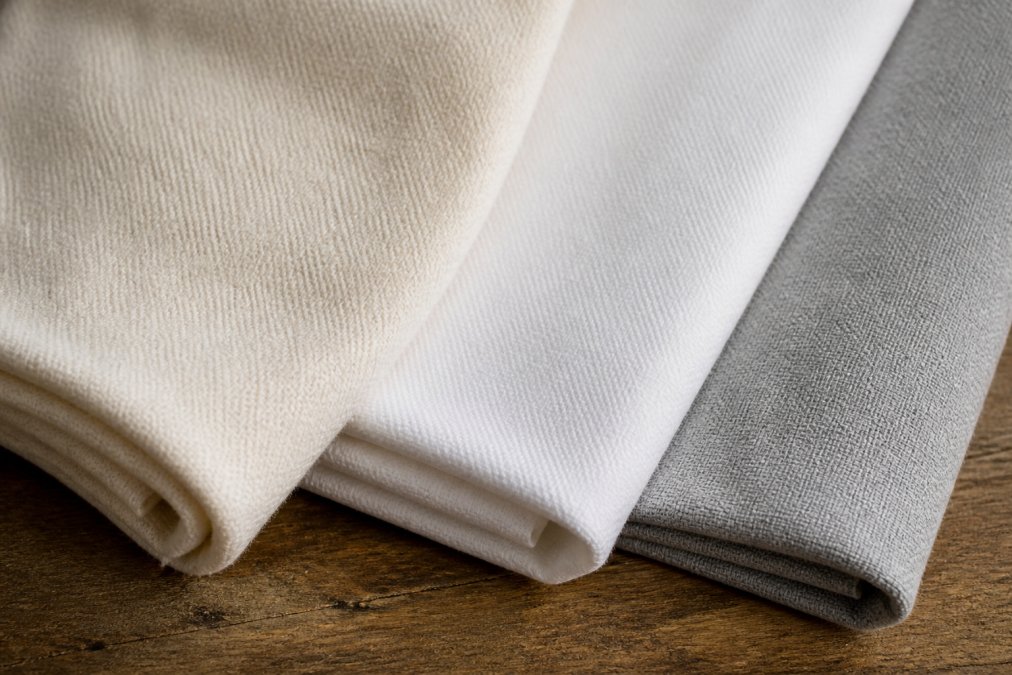
Cotton-poly blends balance the strengths of both. A 50/50 or 65/35 cotton-polyester blend delivers breathability with durability and shrink resistance. These blends work across most printing methods and are the safe choice when unsure.
Best Fabrics for DTF Transfers and Direct-to-Garment Methods
Direct-to-garment printing and DTF transfers have fundamentally different fabric requirements than traditional screen printing. Understanding the chemistry behind each method is essential for consistent results.
Direct-to-garment (DTG) printing applies water-based inkjet ink directly onto fabric. The ink must absorb into the fabric surface to cure properly, depending on fiber absorbency and surface chemistry.
100% cotton and cotton-dominant blends (65/35 or higher cotton content) are ideal for DTG because cotton fibers have natural capillary action that pulls water-based ink deep into the weave. Ring-spun cotton produces superior results due to tighter twist and better ink distribution.
Polyester presents a significant challenge for DTG because polyester fibers are hydrophobic and repel water-based ink. The ink sits on the surface rather than absorbing, causing cracking, rapid fading, and a stiff hand-feel. Many DTG operators use specialized pre-treatment chemicals to temporarily alter the fiber surface.
Cotton-polyester blends work for DTG only if cotton content exceeds 50%. Below 50% cotton, DTG results become unreliable.
DTF transfers (direct-to-film) operate on an entirely different principle. The design is printed onto special PET film, a powder adhesive is applied, then the film is heat-pressed onto the garment at 320-340°F for 10-15 seconds, bonding the design layer to the fabric surface.
Because DTF transfers bond to the surface rather than absorbing into fibers, they work on virtually any fabric, cotton, polyester, nylon, spandex, canvas, leather, and performance fabrics. This versatility makes DTF ideal for mixed fabric types or specialty materials.
DTF transfers add thickness and stiffness compared to screen-printed or DTG designs. On lightweight fabrics (under 120 GSM), the transfer can feel heavy. On stretchy fabrics, the transfer may crack if stretched excessively. High-quality DTF transfers use softer adhesives that flex with the fabric; budget transfers use rigid adhesives that fail under stress.
DTG requires absorbent fibers and works best on natural-fiber garments. DTF works on any fabric but quality depends on adhesive formulation and heat-press technique. DTF offers flexibility for diverse orders; DTG delivers superior color vibrancy and hand-feel on cotton.
Pre-treatment for DTG on synthetic blends: Chemical pre-treatment temporarily increases fiber surface energy, allowing water-based ink to absorb into synthetic fibers. The garment is sprayed or soaked, dried, then printed. Pre-treatment evaporates during curing. This adds cost and labor but makes DTG viable on polyester-heavy blends. Test on scrap fabric first, as some formulations affect color or hand-feel.
Natural vs. Synthetic Fibers: What Works Best for Each Printing Technique
Natural fibers include cotton, linen, hemp, and wool. They absorb moisture and ink readily, making them excellent for screen printing and DTG. However, they shrink, wrinkle, and fade more easily than synthetics.
Synthetic fibers include polyester, nylon, acrylic, and spandex. They resist shrinking, fading, and wrinkling, and excel with heat-based printing methods like sublimation and heat transfer vinyl. Nylon-spandex blends provide durability plus mobility, ideal for athletic wear.
The trade-off: synthetics don't breathe as well. Screen printing on 100% polyester requires special inks designed to bond with synthetic fibers, or prints peel after washing.
Match your fiber type to your printing method: cotton for screen printing and DTG; polyester or blends for sublimation and HTV; any fiber for DTF transfers.
Printing Techniques for Different Materials: Screen Printing, HTV, and Sublimation
Screen printing transfers ink through a stenciled screen directly onto fabric. This method works best on absorbent, natural-fiber fabrics like cotton and cotton-poly blends. Screen printing produces vibrant, durable prints but requires proper curing and has higher setup costs for small runs.
Heat transfer vinyl (HTV) uses a heat press to bond a pre-cut vinyl layer onto fabric. HTV works on almost any garment and is ideal for small orders and custom designs because there's no screen setup required. However, vinyl can crack or peel if stretched excessively or washed in hot water.
Sublimation printing uses heat to transfer dye directly into synthetic fibers, working exclusively on polyester or polyester-coated materials. It produces photographic-quality results with full-color gradients but only works on light-colored polyester.
Fabric Weight, GSM, and Durability Factors That Affect Print Quality
GSM (grams per square meter) measures fabric density. Heavier fabrics (over 200 GSM) are more durable and hold prints longer. For custom apparel lasting through multiple washes, choose 180-220 GSM minimum.
Fabric weight affects ink adhesion. The sweet spot for screen printing is usually 150-200 GSM, heavy enough for durability, light enough for comfort.
Tightly woven fabrics resist pilling better than loosely knit materials. Ring-spun cotton and quality polyester blends pill less than cheaper alternatives. For heavy-use apparel, invest in higher-quality fabrics with better tensile strength.
Eco-Friendly and Sustainable Fabric Printing Options
Sustainable printing is becoming standard.
Organic cotton is grown without synthetic pesticides or fertilizers and accepts screen printing and DTG transfers beautifully. The cost is higher, but quality-conscious brands view it as worth the investment.
Recycled polyester uses reclaimed plastic bottles and textile waste, performing identically to virgin polyester for heat transfer and sublimation while reducing environmental impact.
Hemp and linen blends offer natural, sustainable alternatives requiring less water and fewer chemicals than cotton. Hemp-cotton blends work well for screen printing and DTG.
Sustainability appeals to modern consumers and aligns with corporate values.
Troubleshooting Print Failures by Fabric Type
Print failures are rarely random, they result from mismatches between fabric chemistry, printing method, and process parameters. Understanding the mechanism behind each failure type helps you prevent it before it happens.
Screen printing on polyester fails when standard cotton-formulated inks are used. Polyester fibers are hydrophobic and have a smooth, non-absorbent surface. Cotton-formulated inks rely on fiber absorbency to cure; they wick into cotton's capillary structure and bond with cellulose. On polyester, these inks sit on the surface, never fully curing. The result: prints crack and peel after a few washes. The fix is to use polyester-specific inks that contain chemical binders designed to adhere to synthetic fibers without absorption. These inks cure through oxidation and cross-linking rather than absorption. Always test polyester-specific ink on scrap fabric before committing to production.
DTG prints cracking on polyester occurs because water-based inkjet ink cannot penetrate polyester's hydrophobic surface. The ink dries on top of the fibers rather than bonding within them. When the garment stretches or flexes, the dried ink layer cracks like paint on a stretched canvas. Two solutions exist: (1) pre-treat the polyester with a chemical base that temporarily increases surface energy and allows ink absorption, or (2) switch to DTF transfers, which bond to any surface through heat-activated adhesive rather than absorption. Pre-treatment adds labor and cost; DTF is more reliable for polyester but produces a slightly stiffer hand-feel.
Heat transfer vinyl peeling is almost always a temperature or pressure problem, not a fabric problem. Vinyl adhesive requires specific heat activation. If your heat press isn't reaching the correct temperature, the adhesive won't fully melt and bond. If pressure is insufficient, contact between vinyl and fabric is incomplete. Verify your heat press is calibrated correctly, many drift over time. Check the vinyl manufacturer's specifications; some vinyl requires 300°F for 15 seconds, others need 320°F for 10 seconds. Temperature differences of just 20°F can mean the difference between a permanent bond and a peel.
Frequently Asked Questions
What is the best fabric for printing custom apparel?
The best fabric depends on your printing method and durability needs. Cotton offers excellent ink absorption and color fastness for screen printing, while polyester works better for sublimation and heat transfer vinyl due to its synthetic fiber composition. Cotton-poly blends balance moisture-wicking, stretch, and print retention. For direct-to-garment (DTG) printing, ring-spun cotton and cotton-dominant blends deliver the sharpest detail and longest-lasting color.
Is cotton or polyester better for screen printing?
Cotton is generally superior for screen printing. Its natural fiber structure provides excellent ink adhesion and color fastness without fading after washing. Cotton's absorbency rate allows inks to bond permanently to the fabric. Polyester can work but requires special inks and longer curing times. For custom apparel that needs durability and vibrant colors, 100% cotton or 80/20 cotton-poly blends are the industry standard for screen printing applications.
Which fabric is best for DTF transfers?
Polyester and polyester-rich blends are best for DTF (direct-to-film) transfers. Synthetic fibers bond well with the heat-activated adhesive used in DTF printing. Nylon-spandex blends and 65/35 polyester-cotton blends offer excellent thermal sensitivity and durability. Pure cotton can work but requires proper pre-treatment and heat press settings. Avoid heavily textured or low-GSM fabrics, as they may not hold the transfer evenly across the print area.
What fabric weight should I choose for printed custom apparel?
Fabric weight (measured in GSM, or grams per square meter) affects durability and print quality. For screen printing, 5.3-6.0 oz cotton (180-200 GSM) is standard for t-shirts and provides good ink adhesion without excessive weight. Heavier fabrics (7.0+ oz) work for polo shirts and sportswear but require longer curing times. Lighter fabrics (under 5 oz) are prone to pilling and may not hold prints through multiple washes. Match GSM to your intended use: casual wear benefits from lighter weights, while workwear and high-use garments need 6.0+ oz for longevity.