 how-to
How to Choose Branded Corporate Apparel for Trade Shows
Table of Contents
- Step 1: Define Your Brand Goals and Event Needs
- Step 2: Select the Right Garment Type and Fabric Weight
- Step 3: Choose Decoration Methods: Custom Logo Embroidery vs Screen Printing
- Step 4: Nail Logo Placement, Size, and Color Coordination
- Step 5: Establish a Trade Show Booth Staff Dress Code
- Step 6: Get Sizing Right with Gender-Inclusive Options
- Step 7: Plan for Sustainability and Post-Event Apparel Lifecycle
- Frequently Asked Questions
Last Updated: September 22, 2026
Step 1: Define Your Brand Goals and Event Needs
Branded corporate apparel is clothing printed or embroidered with your company logo and worn by staff at events. It turns your team into a walking billboard. At Logo Concepts & Printing, we've spent over 25 years helping banks, dealerships, and construction firms get this right.
- Build brand recognition at a crowded show
- Make your team easy to spot from across the hall
- Give staff a professional, put-together look
- Create a uniform that lasts beyond the event
Setting a Realistic Budget for Your Team Size
Total cost = (garment cost × number of staff) + decoration setup + shipping
The Cost Drivers That Actually Move Your Quote
Four levers control most of the price, and knowing them lets you negotiate instead of guess:
- Garment tier: A basic cotton tee, a mid-weight cotton-poly polo, and a performance quarter-zip sit in three different price bands. Moving one tier up on a 20-person order is usually a modest increase per person; moving up on a 200-piece giveaway order is not.
- Decoration method: Embroidery carries a one-time digitizing setup charge, then a per-piece stitch cost. Screen printing carries a per-color, per-location screen setup charge, then a low per-piece cost that drops as volume rises. On small runs, embroidery often wins on total cost; on large runs, screen printing usually does.
- Number of print locations: A left-chest logo only is the cheapest option. Adding a back print, a sleeve mark, or a name personalization adds setup and per-piece cost for each location.
- Turnaround time: Standard production is cheaper than rush production. If your show date is tight, expect a rush fee, and confirm the in-hands date in writing before you approve the order.
Set a Per-Person Target, Not Just a Total
A useful planning habit is to set a per-person apparel budget before you shop. Decide what you are willing to spend to outfit one staffer head-to-toe, top, bottom guidance, and any layering piece, then work backward to a garment tier and decoration method. This keeps a 15-person booth team and a 60-person event team on the same logic, and it makes it obvious when a request to "add quarter-zips for everyone" will blow the budget.
Build in a Contingency
U.S. Small Business Administration guidance on small business budgeting and cash flow
Step 2: Select the Right Garment Type and Fabric Weight
Garment type should match the venue, not your personal taste. The right pick keeps staff comfortable for an eight-hour shift on a concrete floor.
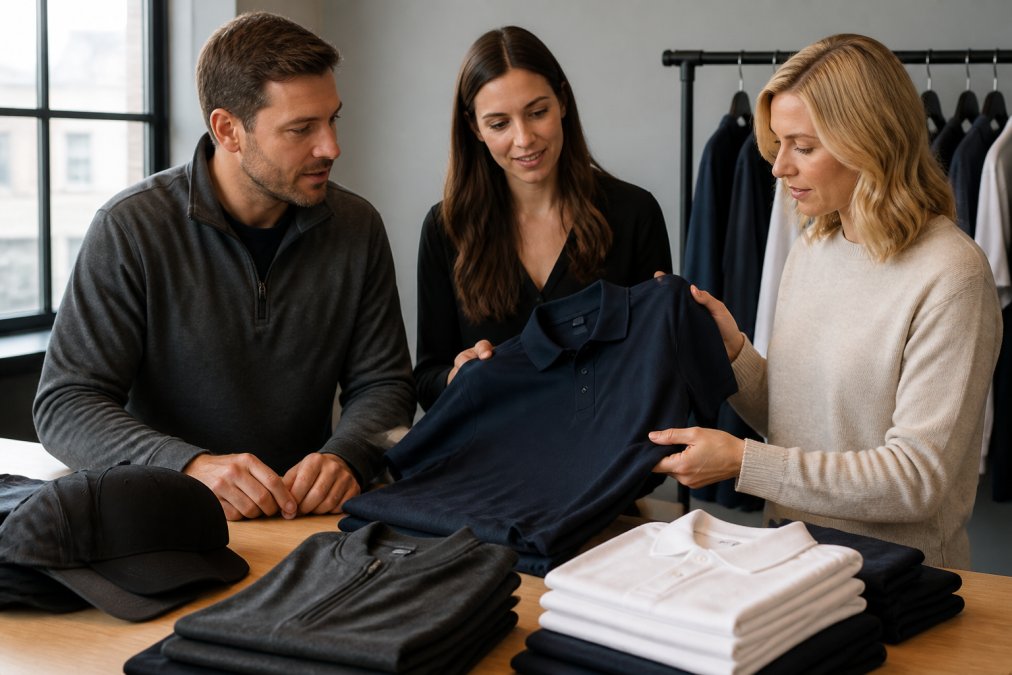
- Polo shirts: The workhorse for booth staff. Professional, breathable, easy to layer.
- Quarter-zips: Great for cooler halls and a more polished look.
- T-shirts: Best for casual, high-energy events or giveaway items.
- Button-downs: Suited to banks and investment firms where trust is the product.
Climate and Venue Considerations
A convention center in July runs hot. An expo hall in January runs cold. Check the venue's climate control before you order. For warm shows, choose moisture-wicking fabrics and lighter colors. For cold halls, quarter-zips or layered options keep staff warm without hiding your logo.
Step 3: Choose Decoration Methods: Custom Logo Embroidery vs Screen Printing
The custom logo embroidery vs screen printing decision comes down to look, quantity, and garment type. Both work well. They just suit different jobs.
| Method | Best For | Look | Durability |
|---|---|---|---|
| Embroidery | Polos, quarter-zips, jackets | Raised, premium | Very high |
| Screen printing | T-shirts, large runs | Flat, bold color | High with proper care |
When to Use Bulk Screen Printing for Events
Bulk screen printing for events makes sense when you need a lot of shirts fast. It's the go-to for giveaways, 5K runs, and big staff teams. Setup costs spread across a large order, so the per-shirt price drops as volume rises. For a small team of 15, embroidery on polos often looks sharper. For 200 giveaway tees, screen printing wins on value.
Step 4: Nail Logo Placement, Size, and Color Coordination
Logo placement follows a simple rule: left chest, centered, and sized to the garment. A logo that's too big looks like a billboard. Too small and nobody reads it.
- Left chest: Standard for polos and button-downs. Keep it 3 to 4 inches wide.
- Full front: Good for t-shirts and giveaways.
- Sleeve: A subtle spot for a secondary mark.
- Back: Large logos work here for staff you see from behind.
Step 5: Establish a Trade Show Booth Staff Dress Code
A trade show booth staff dress code keeps your team looking consistent and on-brand. It also removes guesswork on the morning of the event.
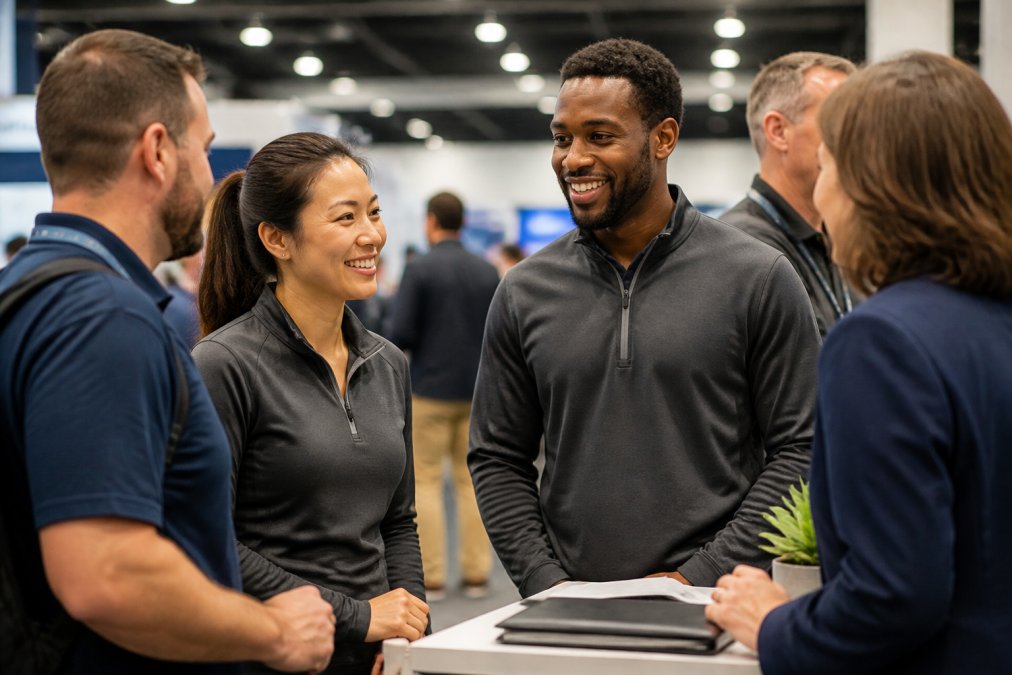
- Everyone wears the same branded top
- Bottoms follow one rule (dark slacks or khakis)
- Closed-toe, comfortable shoes required
- Name badges worn on the right side
- No competing logos or loud patterns
Step 6: Get Sizing Right with Gender-Inclusive Options
Sizing is where most orders go wrong, and it is the one topic nearly every competing guide skips. Order from a real sizing chart, not from guesswork, and treat gender-inclusive sizing as a logistics problem you solve before the order, not after.
Run a Real Size-Collection Process
A clipboard passed around the break room produces bad data. Use a short form instead:
- Ask for height, chest or bust, and waist, not just "small, medium, large"
- Include a note that the form is confidential and only used for ordering
- Give a deadline at least two weeks before you place the order
- Let staff pick a cut and a size separately
- Offer a try-on session with one sample garment per cut if the order is large enough
Account for Decoration and Fabric Shrinkage
Sizing does not end at the label. Two things change how a garment actually fits after you buy it:
- Shrinkage: Cotton-rich fabrics can shrink noticeably after the first wash. If your supplier notes shrinkage on the spec sheet, factor it in. A pre-shrunk or cotton-poly blend holds its size better.
- Decoration pull: A dense embroidered logo on the left chest can stiffen that panel and pull the fabric slightly. On a fitted cut, that pull is more visible. On a straight cut, it disappears.
Order Spares in the Right Sizes
Ordering 10 to 20 percent extra is standard, but the extras matter more than the total. Spread spares across the sizes you actually ordered, weighted toward the middle of the range. A team of 20 rarely needs three extra smalls; it often needs three extra larges and two extra mediums. Keep at least one spare in every size on hand at the show, because a spilled coffee at 9 a.m. should not take a staffer off the floor.
Why Inclusive Sizing Is a Business Decision
Step 7: Plan for Sustainability and Post-Event Apparel Lifecycle
Sustainability starts with buying less and buying better. Durable garments that survive many events beat cheap shirts you replace every season. Look for organic cotton, recycled polyester, and suppliers who share their sourcing.
Plan the post-event lifecycle before the event ends:
- Reuse: Keep branded apparel for the next show.
- Repurpose: Retire worn items as staff workwear.
- Recycle: Send unusable fabric to a textile recycling program.
- Donate: Give clean, unworn extras to local groups.
Frequently Asked Questions
What are the best fabrics for trade show staff uniforms?
The best fabrics for trade show staff uniforms balance comfort and durability. Cotton-poly blends resist wrinkles and hold color well through repeated wear. Performance fabrics like moisture-wicking polyester keep staff cool during long event days. For embroidery, choose a stable fabric with enough weight to support the stitching without puckering. For screen printing, tightly woven fabrics give the cleanest results. Consider the venue climate too: breathable options for warm halls, quarter-zips or layers for cold convention centers.
Should trade show apparel be embroidered or screen printed?
It depends on your logo and quantity. Custom logo embroidery gives a professional, textured look that works well on polos and quarter-zips, and it holds up through many washes. Screen printing suits large, colorful designs and bulk orders, making it cost-effective for big teams. If your logo has fine details or gradients, screen printing may reproduce it better. For small teams wanting a premium feel, embroidery is often the better choice. Many brands use both across different garment types.
How do you balance professional branding with comfort for long trade show days?
Start with breathable, moisture-wicking fabrics so staff stay comfortable through eight-hour shifts. Choose garment types that allow movement, like performance polos or lightweight quarter-zips. Avoid stiff fabrics that restrict mobility. Keep branding clean with one or two logo placements rather than covering the garment. Test samples before ordering in bulk so staff can confirm fit and feel. Comfortable staff look more approachable, which supports your brand visibility goals on the show floor.
What is the best way to size apparel for a diverse team?
Collect accurate measurements from every team member rather than guessing from standard sizes. Offer gender-inclusive sizing options and unisex cuts where possible. Request a full size chart from your supplier and compare it against actual measurements. Order a few sample pieces in different sizes so staff can try them on before you commit to a bulk order. If your team spans a wide range of body types, consider garments with stretch or adjustable features for a better fit.
Choosing branded corporate apparel for trade shows is really a planning job, not a shopping job. Get the goals, sizing, and decoration method right, and your team shows up looking sharp every time. Logo Concepts & Printing handles the whole process for you, from in-house graphic design and campaign planning to custom logo embroidery, screen printing, and rapid turnaround. Contact us today to plan your next event and get apparel your team will actually wear.