 how-to
How to Prevent Custom Apparel Logos From Peeling
Table of Contents
- Why Custom Apparel Logos Peel: Print Methods and Failure Points
- How to Wash Screen Printed Shirts Without Damaging the Logo
- Drying and Ironing Custom Printed Clothing: Heat Rules That Matter
- How to Fix Peeling Vinyl on Shirts: Step-by-Step Repair
- Storage Best Practices: Protecting Logos Between Wears
- Eco-Friendly Laundry Alternatives That Still Protect Your Prints
- Choosing Apparel That Holds Up
- Frequently Asked Questions
Last Updated: September 13, 2026
Why Custom Apparel Logos Peel: Print Methods and Failure Points
Learning how to prevent custom apparel logos from peeling starts with one fact most guides skip: the print method on your shirt decides how it must be washed. At Logo Concepts & Printing, we've decorated apparel for more than 25 years, and the fastest way to ruin a logo is treating every garment the same.
Custom apparel logos peel when the bond between ink or adhesive and fabric breaks down. Heat, harsh chemicals, and mechanical stress each attack that bond differently.
American Cleaning Institute laundry guidance confirms that heat and agitation are the two biggest stressors on any printed fabric, which is why most peeling starts in the dryer, not the washer.
Screen Print vs. Heat Transfer Vinyl: Different Prints, Different Care
Screen print and heat transfer vinyl fail in opposite ways. Screen printing cures plastisol ink into the fabric weave; heat transfer vinyl is a cut film pressed onto the surface with adhesive.
That difference matters:
- Screen print: ink sits in the fabric. It fades and cracks over time but rarely peels in sheets.
- Heat transfer vinyl: adhesive sits on the fabric. It peels at the edges when heat or friction weakens the bond.
- Heat transfer (digital) prints: a polymer layer transfers the design. They crack when stretched and fade with hot water.
How to Identify Your Print Method Before You Wash
Hold the garment up to a light. Screen print ink sits flush with the fabric and you can feel the weave through it. Heat transfer vinyl sits on top like a thin plastic film with a visible edge you can pick at. A digital transfer feels rubbery and slightly raised. If you can peel a corner, it's vinyl or transfer and needs cooler washing than screen print.
How to Wash Screen Printed Shirts Without Damaging the Logo
The single most effective habit is turning the garment inside out before it touches the machine. That step shields the print from the drum and from other garments rubbing against it.
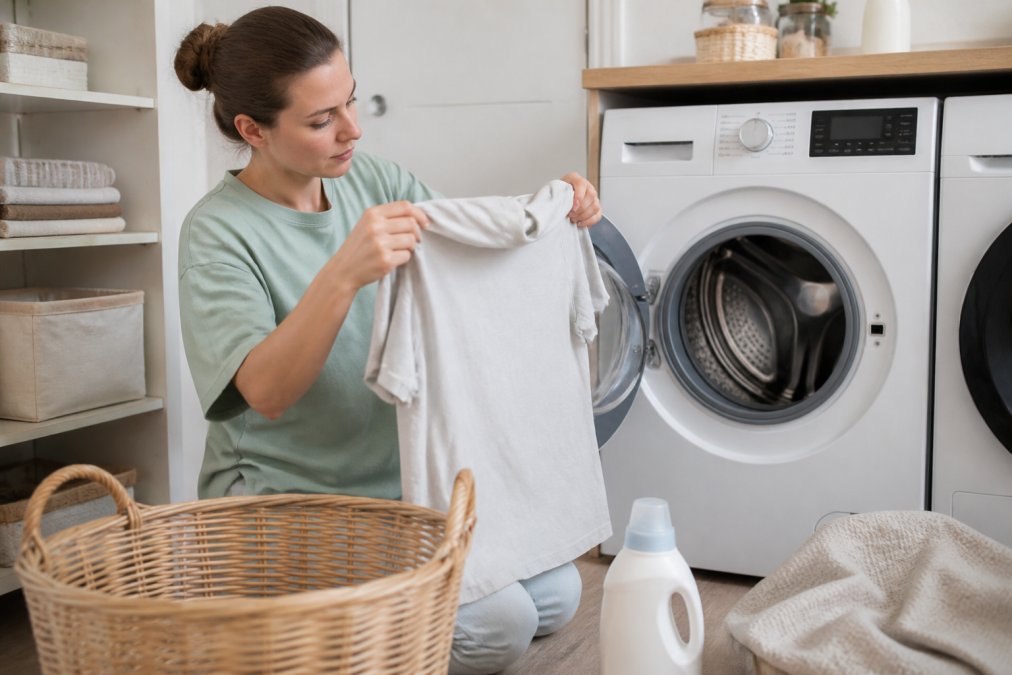
Follow these steps for how to wash screen printed shirts safely:
- Turn the shirt inside out and close all zippers or buttons.
- Wash in cold water on a gentle or delicate cycle.
- Use a mild, liquid detergent with no bleach and no fabric softener.
- Skip the spin cycle on high; a low spin reduces mechanical stress.
- Wash printed items with similar fabrics, not heavy denim or towels.
Water Temperature, Detergent, and Cycle Settings
Cold water is non-negotiable. Hot water softens plastisol and breaks down vinyl adhesive, and once that bond weakens, no detergent can restore it (cleaninginstitute.org). Choose liquid detergent over powder, since undissolved granules can abrade the print. Avoid bleach, fabric softener, and dryer sheets; softener leaves a coating that interferes with adhesion and dulls the ink.
Drying and Ironing Custom Printed Clothing: Heat Rules That Matter
Heat finishes a print at the factory and destroys it at home. The rule for how to iron custom printed clothing: never touch the iron directly to the design.
For drying, hang dry whenever possible. If you must use a machine, tumble dry on the lowest heat setting or air-fluff only. High heat makes vinyl adhesive gummy and cracks plastisol along fold lines. When ironing, turn the garment inside out on low heat with no steam; to press the front, place parchment paper between the iron and the print. A factory heat press uses controlled temperature and pressure; a home iron does not, so keep it away from the logo.
Tumble Dry vs. Hang Dry: What Heat Does to Ink and Adhesive
Tumble drying exposes the print to sustained heat and constant tumbling, softening adhesive while adding mechanical stress; hang drying removes both. If you tumble dry, do it briefly on low heat and remove the garment while still slightly damp. Hang dried garments keep prints crisp far longer than those going through a hot dryer weekly.
| Care Factor | Screen Print | Heat Transfer Vinyl | Digital Transfer |
|---|---|---|---|
| Water temperature | Cold | Cold | Cold |
| Drying method | Hang dry preferred | Hang dry only | Hang dry preferred |
| Ironing | Inside out, no steam | Avoid direct heat | Parchment paper barrier |
| Main failure mode | Cracking, fading | Edge peeling | Cracking, fading |
| Fabric softener | Never | Never | Never |
How to Fix Peeling Vinyl on Shirts: Step-by-Step Repair
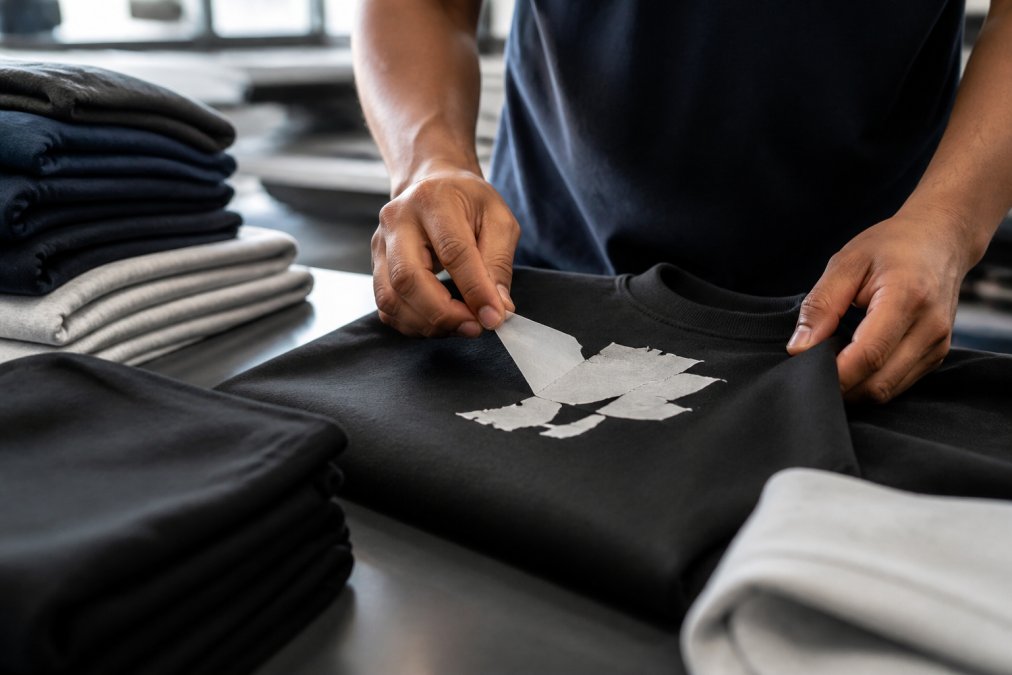
Small lifts at the edge are fixable at home. Here's how to fix peeling vinyl on shirts before the damage spreads, and when the repair is past the point of no return.
Before you touch an iron, identify what failed. Two failure modes need different fixes:
- Adhesive failure: the vinyl film is intact but lifting off the fabric. Edges curl, corners pop, and you can slide a fingernail under the film. This is re-bondable.
- Ink or film failure: the vinyl itself has cracked, crazed, or flaked, or the color has lifted away from the carrier. No amount of heat will restore cracked film, the polymer chain is broken.
If you can lift a corner and the film comes up in one flexible piece, you have adhesive failure. If it crumbles or tears, you have film failure and should skip to the commercial section below.
Home Re-Bonding Steps for Adhesive Failure
- Wash and dry the garment completely so the area is free of detergent residue; any softener film will sabotage the re-bond.
- Lay the shirt flat on a firm, heat-safe surface, a countertop or ironing board, not a bed or carpet.
- Cover the lifted area with parchment paper. Do not use wax paper; the wax transfers to the vinyl.
- Press with a home iron on low-to-medium heat (roughly the "synthetic" or "silk" setting) for 10 to 15 seconds, no steam. Press straight down and hold, do not glide the iron, which drags the film.
- Let it cool fully before checking. Vinyl adhesive bonds as it cools, not while hot.
- Repeat once if needed, but don't overheat. Two passes is the ceiling; a third usually scorches the film and worsens the peel.
Repairing Screen Print and Digital Transfers
Screen print rarely peels in sheets, so a lifting plastisol print usually means under-curing at the factory, not something you caused in the wash. A home iron cannot re-cure plastisol; it needs sustained heat well above what a household iron reaches. The realistic home fix is a light press with parchment to tack a lifted edge down, knowing it will likely lift again. For anything larger, the print needs a commercial heat press or the garment replaced.
Digital transfers sit between the two. They re-bond more readily than plastisol but are more heat-sensitive than vinyl, so use the lowest effective iron setting and shorter dwell times.
When DIY Repair Works and When It Does Not
DIY repair works when the peel is small, recent, at an edge, and the film is still flexible. It does not work when:
- The vinyl has cracked through the middle or crazed across the design
- Large sections have lifted, or the whole logo has separated from the fabric
- The adhesive layer has already failed across the entire print
- The garment has been through repeated hot dryer cycles, which degrades the adhesive chemistry itself
A commercial heat press applies even temperature and pressure across the full platen that a home iron cannot match, a home iron delivers heat in a small, uneven footprint, which is why home repairs often lift again within a few washes. If a logo is central to a uniform or event, replacing the garment usually costs less than a failed repair plus a re-order.
What to Ask a Commercial Decorator Before Re-Pressing
If you take the garment to a shop, ask three questions: what temperature and dwell time they will use, whether they will use a heat press with a pressure gauge, and whether they will re-press the entire design or just the lifted area. Re-pressing only the lifted corner often leaves a visible sheen difference. A shop that re-presses the full design at a consistent setting gives a cleaner result.
Storage Best Practices: Protecting Logos Between Wears
Storage is the gap most care guides ignore. Fold printed garments so the logo faces inward and doesn't rub against other fabric. Avoid hanging vinyl-printed shirts on wire hangers, since the pressure point can crease and crack the film. Keep stored apparel cool, dry, and out of direct sunlight, which fades ink and weakens adhesive. For long-term storage, separate printed items from rough materials like canvas or denim.
Eco-Friendly Laundry Alternatives That Still Protect Your Prints
Most care guides treat "eco-friendly" and "print-safe" as separate goals. In practice they overlap almost completely, because the same harsh inputs that hurt the environment, hot water, petroleum-based solvents, optical brighteners, synthetic fragrance, also attack polymer inks and adhesives. Gentler chemistry protects the print and lowers your footprint at once.
Why Plant-Based Detergents Are Gentler on Prints
Conventional detergents often rely on anionic surfactants and optical brighteners. Brighteners deposit a fluorescent film on fabric to make whites look whiter, and that film lands on your print too, dulling the ink and interfering with the adhesive bond on vinyl. Plant-based liquid detergents typically use nonionic or sugar-based surfactants that rinse cleaner and leave less residue.
Decorators commonly recommend a fragrance-free, dye-free, plant-derived liquid detergent for any decorated garment. Fewer additives means less residue, so the adhesive and ink stay bonded to the fabric instead of to a layer of detergent film.
EPA Safer Choice product search lets you filter for detergents that meet the agency's safer-chemistry criteria, which is a practical shortcut to formulas that are also low-residue.
Cold Water, Short Cycles, and Line Drying
Cold water washing is the highest-leverage eco choice and the highest-leverage print-protection choice. Heating water accounts for most of a wash cycle's energy use, and hot water softens plastisol and vinyl adhesive. A short, gentle cold cycle plus hang drying cuts energy use and removes the two biggest stressors on a print at once.
Replacing Dryer Sheets Without Hurting Adhesion
Dryer sheets coat fabric with a waxy lubricant, the same coating that interferes with print adhesion and dulls ink. Wool dryer balls are the standard replacement: they separate laundry to speed drying without depositing film. For a light scent, add a few drops of essential oil to the balls. Avoid dryer sheets entirely on any garment with a heat transfer vinyl or digital transfer logo.
What to Avoid Even in "Natural" Products
Not everything marketed as natural is print-safe. Watch for:
- Citrus-based degreasers and "boosters", the d-limonene in citrus solvents can attack some vinyl adhesives
- Oxygen bleach boosters, gentler than chlorine bleach, but still an oxidizer that fades ink over time
- Enzyme-heavy formulas, proteases and lipases are designed to break down organic films, and some can degrade the polymer surface of a print with repeated exposure
- Fabric softener in any form, including "natural" versions made with plant-derived quaternary ammonium compounds, which coat the print the same way conventional softener does
The safest eco routine for decorated apparel is also the simplest: cold water, short gentle cycle, plant-based fragrance-free liquid detergent dosed low, wool dryer balls instead of sheets, and hang drying whenever possible.
Choosing Apparel That Holds Up
The care habits above extend the life of any print, but they can only do so much with a weak initial bond. Curing, ink selection, and fabric compatibility determine how well a logo survives its first fifty washes. A properly cured screen print on a compatible fabric outlasts a poorly applied transfer every time. When you source custom apparel, ask how the print is cured and whether the ink matches the garment.
That's where working with an experienced decorator pays off. Logo Concepts & Printing brings over 25 years of marketing and design experience to every order, with in-house graphic design, rapid mockups, and access to thousands of customizable items through our iPromoteu affiliation. We help you match the right print method to the right fabric so your logos stay sharp.
Frequently Asked Questions
How do I wash custom shirts to prevent logo peeling?
Turn the shirt inside out and wash in cold water on a gentle cycle. Use mild detergent without bleach or fabric softener. Avoid overloading the machine, which causes friction that breaks down ink bonding. Skip the dryer and hang the shirt to dry. These steps reduce mechanical stress and heat exposure, the two biggest causes of peeling on screen print and heat transfer vinyl.
Can you fix a logo that is already peeling off a shirt?
Small lifts on heat transfer vinyl can be repaired with parchment paper and a heat press or iron set to low heat. Press for 15 to 20 seconds, then let the shirt cool before moving it. Screen printed logos that have cracked or flaked cannot be re-fused at home. In that case, a commercial reprint is the only reliable fix.
Is it safe to iron over custom apparel logos?
Never place the iron directly on a printed logo. The heat will melt vinyl or scorch screen print ink. If you must iron, turn the garment inside out and press the back of the fabric, or place a sheet of parchment paper over the print and use the lowest heat setting with no steam. For best results, iron around the logo area, not on it.
Does heat drying cause custom apparel logos to peel?
Yes. High heat from a tumble dryer softens the polymer bond between the ink or vinyl and the fabric. Over time, that bond weakens and the print lifts at the edges. Hang drying or using a low-heat, air-only dryer setting extends print durability significantly. Heat is the number one enemy of print adhesion.
Peeling logos undermine the professional look you paid for, whether it's a uniform, an event shirt, or a team gift. The right care routine helps, but starting with a quality print is what makes it last. Logo Concepts & Printing offers expert planning, in-house design, and fast turnaround on custom apparel and promotional merchandise. Contact us today to build branded gear that holds up wash after wash.