 ultimate-guide
Promotional Merchandise for 2026 Product Launches
Table of Contents
- Why Promotional Merchandise Matters for Product Launches in 2026
- Top Promotional Product Trends for 2026
- Bulk Screen Printing for Events: Execution and Quality Standards
- Branded Swag Bag Ideas for Product Launches
- Sustainable Promotional Products 2026: Eco-Conscious Selection
- Planning Supply Chain and Lead Times for Launch Success
- Measuring ROI and Post-Launch Engagement
- Frequently Asked Questions
Last Updated: September 26, 2026
Why Promotional Merchandise Matters for Product Launches in 2026
Promotional merchandise creates lasting brand impressions that digital ads cannot replicate. Promotional merchandise can contribute to stronger customer retention and higher engagement rates.
Promotional merchandise accomplishes three goals simultaneously: establishing brand identity, creating memorable touchpoints, and building customer loyalty. A branded t-shirt or custom water bottle sits in someone's daily life, reinforcing your brand message repeatedly without additional cost.
The challenge is how to choose the right items, execute them at scale, and measure their actual impact on your business for promotional merchandise for 2026 product launches.
Top Promotional Product Trends for 2026
Successful campaigns in 2026 prioritize products that people actually use rather than those destined for a drawer.
Tech-forward swag dominates current demand. Wireless charging pads, portable phone stands, and branded USB drives appeal to professional audiences. For construction companies and automotive dealerships, practical tech accessories like flashlights or Bluetooth speakers perform well because they solve real problems on the job site.
Quality apparel with proper screen printing creates visual consistency. The difference between success and mediocrity comes down to fabric quality and print durability. A well-made piece extends visibility for years.
Custom water bottles, coffee mugs, and insulated tumblers get used multiple times per day. Banks and investment firms benefit from professional drinkware that fits their corporate image while serving genuine function.
Limited-edition merchandise creates urgency. Tying products to specific launch dates or events drives perceived value through scarcity.
Bulk Screen Printing for Events: Execution and Quality Standards
Bulk screen printing requires precision planning. The difference between success and failure comes down to print quality and consistency.
Start with a clear specification document defining logo placement, color accuracy, and tolerances. Vague instructions lead to inconsistent results. Instead, specify: "1.5-inch logo centered 2 inches below the neckline, using Pantone 286C blue."
Print durability directly impacts brand perception. Testing sample prints before full production can help prevent costly mistakes.
Lead times for bulk screen printing depend on order size and complexity. Rush orders may incur additional costs.
| Execution Element | Standard Timeline | Rush Option | Quality Impact |
|---|---|---|---|
| Design approval | 3-5 days | 1 day | Critical, errors here compound |
| Screen setup | 3-5 days | 1-2 days | High, affects all prints |
| Production printing | 5-10 days | 2-5 days | Moderate, rushing increases defects |
| Quality inspection | 1-2 days | Same day | Critical, catches defects early |
| Packaging and shipping | 2-3 days | 1 day | Moderate, affects delivery condition |
Branded Swag Bag Ideas for Product Launches
A well-designed swag bag creates an unboxing experience that extends your brand message. Contents should feel intentional, not random.
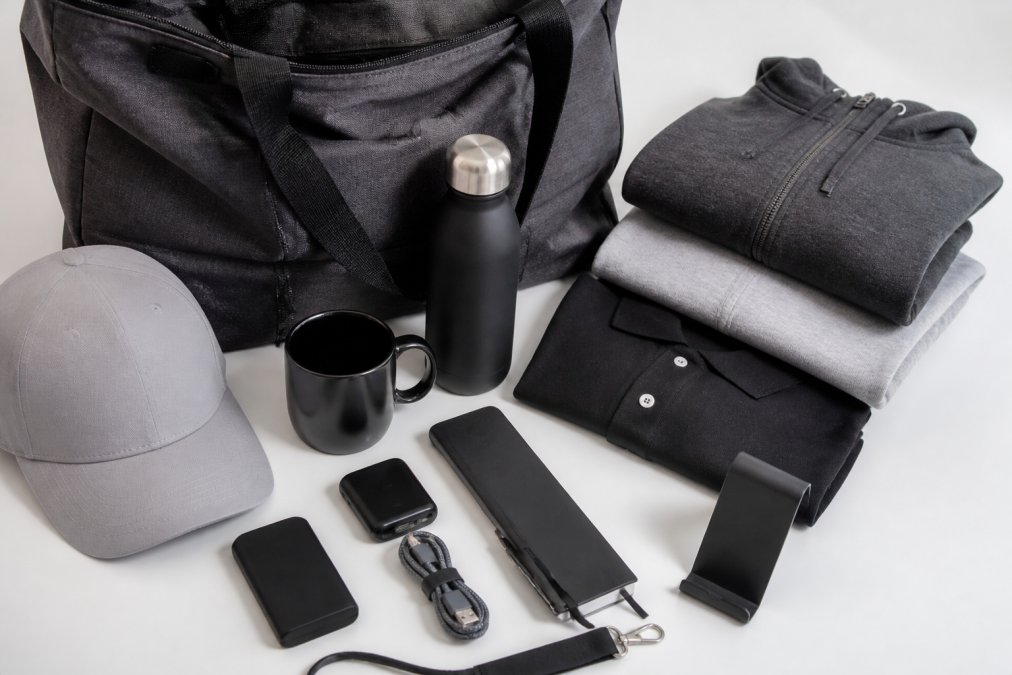
Define your audience first. Tech professionals appreciate quality pens, portable chargers, and branded notebooks. Construction workers value practical items like work gloves, flashlights, or safety gear with your logo.
Tier your swag offerings: basic (t-shirt and pen), mid-tier (add water bottle and notebook), premium (add wireless earbuds or leather portfolio). This manages costs while maintaining perceived value.
Every item should serve a purpose. A branded phone stand used daily builds brand loyalty better than a stress ball that sits in a drawer.
Packaging matters. A swag bag in a branded box with tissue paper creates better first impressions than items in a generic bag.
Sustainable Promotional Products 2026: Eco-Conscious Selection
Sustainable promotional products increasingly influence purchasing decisions, particularly among younger demographics. Banks and investment firms market sustainability commitments, making eco-friendly merchandise a strategic choice.
Eco-conscious apparel uses organic cotton or recycled polyester. Organic cotton eliminates pesticide residues; recycled polyester reduces plastic waste. Both appeal to environmentally conscious customers.
Sustainable drinkware includes bamboo fiber cups and stainless steel bottles made from recycled materials.
Planning Supply Chain and Lead Times for Launch Success
Supply chain planning separates successful launches from chaotic ones. Work backward from your launch date, building realistic buffers at each stage.
Backward Planning Framework
- Delivery window: June 10th (5-day buffer before launch)
- Shipping time: Subtract 5-7 days = June 3rd (merchandise must ship)
- Quality inspection & packaging: Subtract 2-3 days = May 31st (production must complete)
- Production printing: Subtract 7-14 days depending on order size = May 17th-24th (printing starts)
- Screen setup & color matching: Subtract 3-5 days = May 12th-19th (artwork approved)
- Design revisions & approval: Subtract 5-7 days = May 5th-12th (design submitted)
Order Size and Lead Time Trade-offs
Contingency Planning for Common Delays
Printer Communication and Commitment
International Orders and Customs Delays
Tracking and Milestone Checkpoints
Measuring ROI and Post-Launch Engagement
Attribution Mechanisms: Connecting Merchandise to Conversions
Unique QR Codes and Landing Pages
Promo Codes and Unique Discount Codes
Event Registration and Email Tracking
Defining Success Metrics Before Launch
Post-Launch Engagement and Extended Brand Exposure
Merchandise Longevity and Repeat Exposure
- Survey recipients at 30, 60, and 90 days post-distribution: "Are you still using the merchandise we sent you?"
- Monitor social media for ongoing mentions weeks or months after distribution.
- If merchandise is apparel, estimate wear frequency based on customer feedback.
Customer Feedback and Qualitative Data
- Post-distribution survey: "How would you rate the quality of the merchandise? Did it influence your perception of our brand? Would you recommend our product to others?"
- Customer interviews: Call 10-15 customers who converted after receiving merchandise. Ask what they thought of the merchandise, whether it influenced their purchase decision, and what they liked or disliked.
- Social media comments: Read comments on user-generated content. Customers often explain why they like merchandise ("Love this hoodie, great quality") or dislike it ("The print faded after two washes").
Calculating True ROI
Total Campaign Cost = Merchandise cost + Design + Screen setup + Shipping + Event logistics + Tracking tools
Iterating Based on Results
- Which merchandise types drove the highest conversion rates?
- Which promo codes were used most frequently?
- Which customer segments engaged most with merchandise?
Use these insights to optimize your next campaign.
Frequently Asked Questions
What are the top promotional product trends for 2026?
2026 trends emphasize sustainable materials, personalized tech accessories, and functional apparel that provides daily utility. Eco-conscious items like reusable drinkware and organic cotton apparel resonate with environmentally aware audiences. Limited-edition merchandise tied to specific product launches builds brand loyalty and exclusivity. Tech-forward items such as wireless chargers and branded USB drives appeal to modern audiences. Companies are moving away from generic items toward products that integrate seamlessly into daily life, creating stronger brand recall and customer retention.
How do you choose the right promotional merchandise for a product launch?
Start by defining your target audience and what they value daily. Consider whether the item aligns with your brand identity and product category, tech accessories work better for software launches, while apparel suits broader consumer brands. Evaluate durability and perceived value; cheap items damage brand reputation. Determine your budget per unit based on total campaign spend divided by audience size. Factor in customization options and lead times. Finally, select items that encourage repeat use, ensuring ongoing brand visibility. Your design and logo placement should reflect your visual identity consistently across all pieces.
How can bulk screen printing enhance a product launch event?
Bulk screen printing allows you to create cohesive, professional branded apparel at scale while maintaining quality consistency. When executed properly, screen-printed items serve as walking advertisements during and after your launch event. High-quality printing resists fading and peeling through multiple washes, preserving your brand image long-term. Bulk ordering reduces per-unit costs, allowing you to distribute items to larger audiences without exceeding budget. Screen printing also enables precise logo placement and color accuracy, reinforcing brand consistency. Items like t-shirts and hoodies worn by attendees extend your event's reach beyond the venue itself.
What sustainable promotional items are trending for 2026?
Eco-friendly merchandise reflects growing consumer demand for corporate responsibility. Top sustainable options include organic cotton apparel, recycled polyester items, bamboo drinkware, and reusable water bottles. Biodegradable packaging for swag bags reduces environmental impact. Items made from sustainable materials often command premium pricing, signaling quality and brand values to your audience. Sustainable choices enhance brand reputation, particularly with environmentally conscious customers and employees. When selecting eco-friendly merchandise, verify certifications and material sourcing to ensure authenticity. Communicating your sustainability choice strengthens brand identity and customer loyalty.
How far in advance should I order promotional merchandise for a product launch?
Plan ahead for standard orders to account for design approval, production, and shipping. Rush orders are possible but may incur additional fees. Lead times vary based on customization complexity, quantity, and supplier capacity. Factor in time for design proofing, your vendor should provide samples for approval before full production begins. If your launch date is sooner, discuss expedited options with your supplier immediately. Building in buffer time prevents last-minute stress and ensures quality isn't compromised for speed.
How do I measure the ROI of promotional merchandise campaigns?
Track metrics tied to your business goals: brand awareness (social media mentions, website traffic spikes), lead generation (QR codes on items linking to landing pages), and customer retention (repeat purchases from attendees). Use unique discount codes or promotional URLs on merchandise to attribute sales directly to the campaign. Survey recipients about brand recall and perception. Monitor inventory movement if merchandise includes product samples. Calculate cost per impression by dividing total campaign spend by estimated audience reach. Compare customer acquisition cost from merchandise campaigns against other marketing channels. Post-launch engagement, tracking how long recipients keep and use items, indicates durability and brand loyalty impact.
What's the difference between screen printing and embroidery for promotional apparel?
Screen printing uses ink applied through mesh screens, ideal for large designs, bold colors, and high-volume orders. It's cost-effective at scale and produces vibrant, durable results when done properly. Embroidery stitches designs directly into fabric, offering a premium feel and exceptional durability. Embroidery works best for smaller, detailed logos and creates a tactile, high-end appearance. Screen printing handles complex multi-color designs better; embroidery excels with simple, refined logos. For bulk orders, screen printing is typically more economical. Choose screen printing for maximum impact on t-shirts and casual wear; embroidery for polo shirts, hats, and premium apparel where perceived quality matters most.