 how-to
7 Trade Show Giveaway Designs That Actually Get Kept
Last Updated: October 31, 2026
Quick Summary
Design effective trade show giveaways by scoring items on usefulness, portability, perceived value, logo space and cost per unit before you buy. Pick items that match your audience's daily routine, and confirm decoration durability so the item survives repeated use.
- Score every candidate item from 1 to 5 on usefulness, portability, perceived value, logo space and cost per unit.
- An item scoring below 3 on size, materials or decoration durability will likely be discarded.
- Split your budget into premium, mid-range and low-cost tiers, starting from expected attendance.
- Reserve premium items for attendees who complete a qualifying action like a product demo.
- Measure cost per qualified lead as total giveaway spend divided by qualified leads captured.
Table of Contents
- Why Most Trade Show Giveaways End Up in the Trash
- Step 1: Build a Giveaway Selection Framework Before You Buy
- Step 2: Pick Trade Show Giveaway Ideas That Match Your Audience
- Step 3: Design Useful Trade Show Swag People Keep
- Step 4: Set Your Trade Show Giveaway Budget and Quantities
- Step 5: Source Sustainable Trade Show Giveaways
- Step 6: Use Giveaways to Drive Booth Traffic and Measure Results
- Plan Your Next Giveaway Order With Logo Concepts & Printing
- Frequently Asked Questions
Why Most Trade Show Giveaways End Up in the Trash
Most trade show giveaways fail for one simple reason: they were bought to be handed out, not to be kept.
This guide covers how to design effective trade show giveaways that get kept, carried home, and used for months.
Here is the core tension. Buyers walk the floor with limited bag space and limited patience. Every item competes with hundreds of others for the same square inch of attention.
Step 1: Build a Giveaway Selection Framework Before You Buy
The first step is to score items before you spend a dollar. A trade show giveaway selection framework is a simple scoring method that ranks candidate items on the traits that predict whether people keep them. Skip this and you are guessing.
Score Items on Usefulness, Portability, and Cost Per Unit
Score every candidate item from 1 to 5 on each of these:
- Usefulness: Will the average attendee use it weekly?
- Portability: Does it fit in a bag or pocket without bulk?
- Perceived value: Does it feel worth more than it cost?
Add the scores. Items that score high on usefulness and portability tend to get kept. Items that only score high on cost per unit tend to get tossed.
Score every candidate item from 1 to 5 on these traits before you spend a dollar.
| Trait | What to ask |
|---|---|
| Usefulness | Will the average attendee use it weekly? |
| Portability | Does it fit in a bag or pocket without bulk? |
| Perceived value | Does it feel worth more than it cost? |
| Logo space | Can your brand read clearly without ruining the item? |
| Cost per unit | Does the price hold up at your quantity? |
Step 2: Pick Trade Show Giveaway Ideas That Match Your Audience
The best trade show giveaway ideas match how your audience actually works. A construction crew and a bank branch manager keep very different things. Pick items that slot into the daily routine of the people you want to reach.
Ideas by Audience: Banks, Dealerships, and Construction Firms
- Banks and investment firms: Insulated tumblers, leather portfolios, and quality notebooks feel professional and get used in meetings.
- Car dealerships: Branded keychains, microfiber cloths, and collapsible totes work for buyers who just left the lot.
- Construction companies: Heavy-duty water bottles, hard-hat stickers, and durable pens survive job sites.
If you market to financial audiences, our guide to the best promotional items for banks breaks down specific picks. Automotive teams can pull proven ideas from the best promotional giveaways for car buyers. Match the item to the job, and the keep rate climbs.
Step 3: Design Useful Trade Show Swag People Keep
Useful trade show swag earns its place by solving a small, real problem. The design details decide whether an item feels like a gift or like clutter. Most guides skip this part.
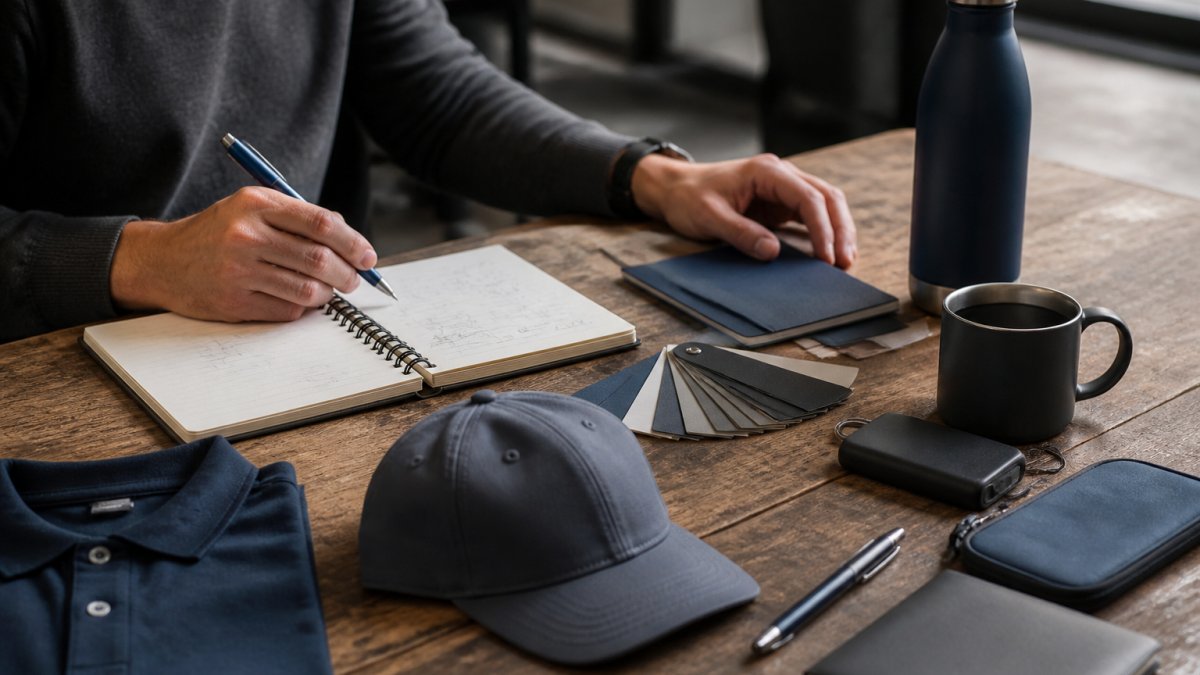
The Five Design Levers That Decide Keep Rate
Treat every candidate item as a set of design decisions, not a finished product. These five levers explain why two items at the same unit cost can have wildly different keep rates:
- Size and portability. An item must fit in a tote bag or a jacket pocket without becoming the heaviest thing the attendee carries. Oversized items get left at the booth or abandoned in the hotel room. Measure the item against the bag or pocket your attendees will actually carry it in before you commit.
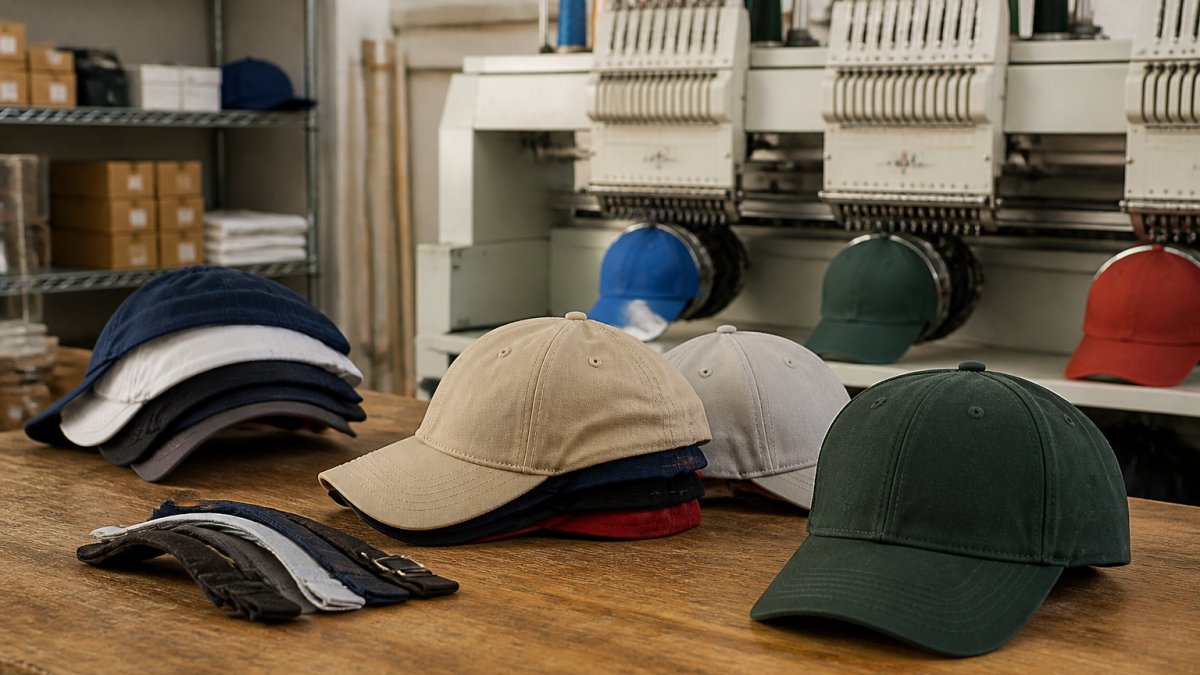
- Materials and perceived quality. Attendees judge quality by touch within seconds. Material choice signals value more reliably than logo size, so pick the material first and the decoration second.
- Aesthetics independent of your logo. An item should look good enough to use even if the logo were removed. A well-designed notebook, a clean-colored bottle, or a tote in a wearable color gets used; an item that looks like a billboard gets stored in a drawer. Choose a base color palette that fits the item's real-world use, then place the logo so it complements rather than dominates.
A Quick Design Scorecard
Before you approve any item, score it 1 to 5 on each lever above. An item that scores below 3 on size, materials, or decoration durability will likely be discarded regardless of how good the logo looks.
Personalization and Accessibility Without Inventory Headaches
Personalization raises keep rate because it makes an item harder to discard, but it also creates operational complexity. A practical middle ground is to personalize a small premium tier (for example, names on notebooks or initials on tumblers) while keeping the bulk of the order generic.
Get these details right and the item stops being swag and starts being something the attendee chooses to keep.
Step 4: Set Your Trade Show Giveaway Budget and Quantities
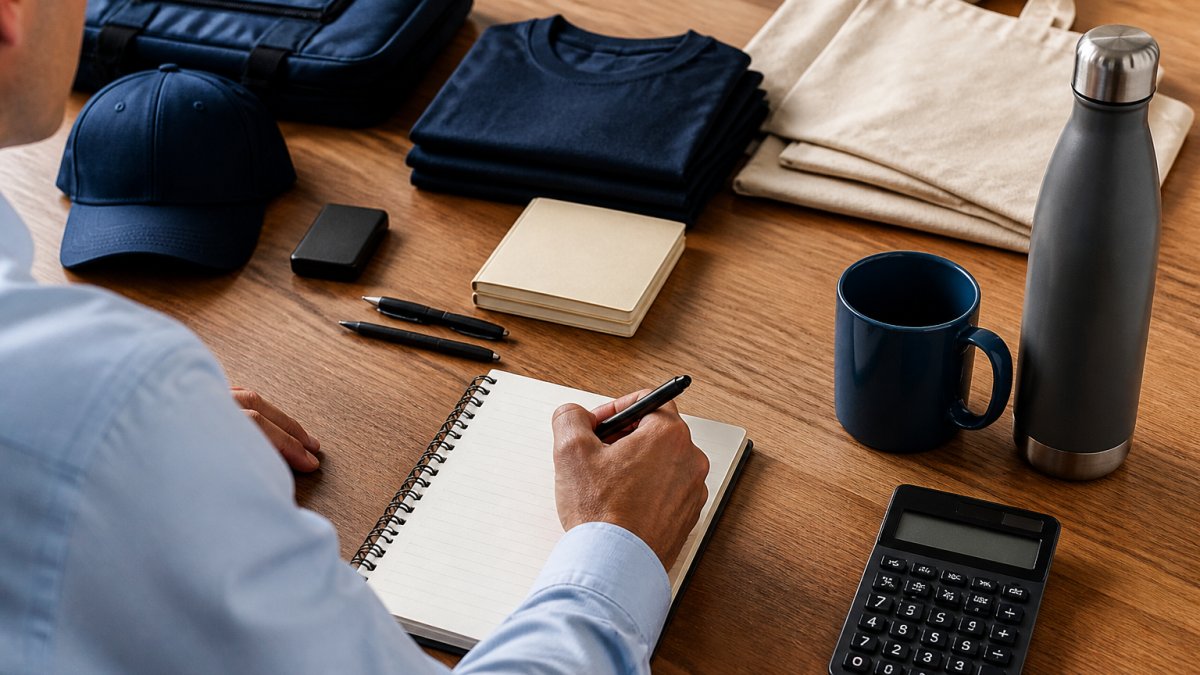
A trade show giveaway budget should start with expected attendance, not with a wish list. Pull your historical show data first. If you handed out 600 items at last year's event, plan for a similar number and add a small buffer.
Split your spend into tiers:
- Tier 1, premium items: A small count for qualified leads and key accounts.
- Tier 2, mid-range items: The bulk of your order for general attendees.
- Tier 3, low-cost items: Stickers, magnets, and pens for passersby.
For help planning quantities and spend, see our promotional items budget planning tips. Pricing depends on quantity, item, and delivery date, so confirm current numbers with our team before you finalize.
Step 5: Source Sustainable Trade Show Giveaways
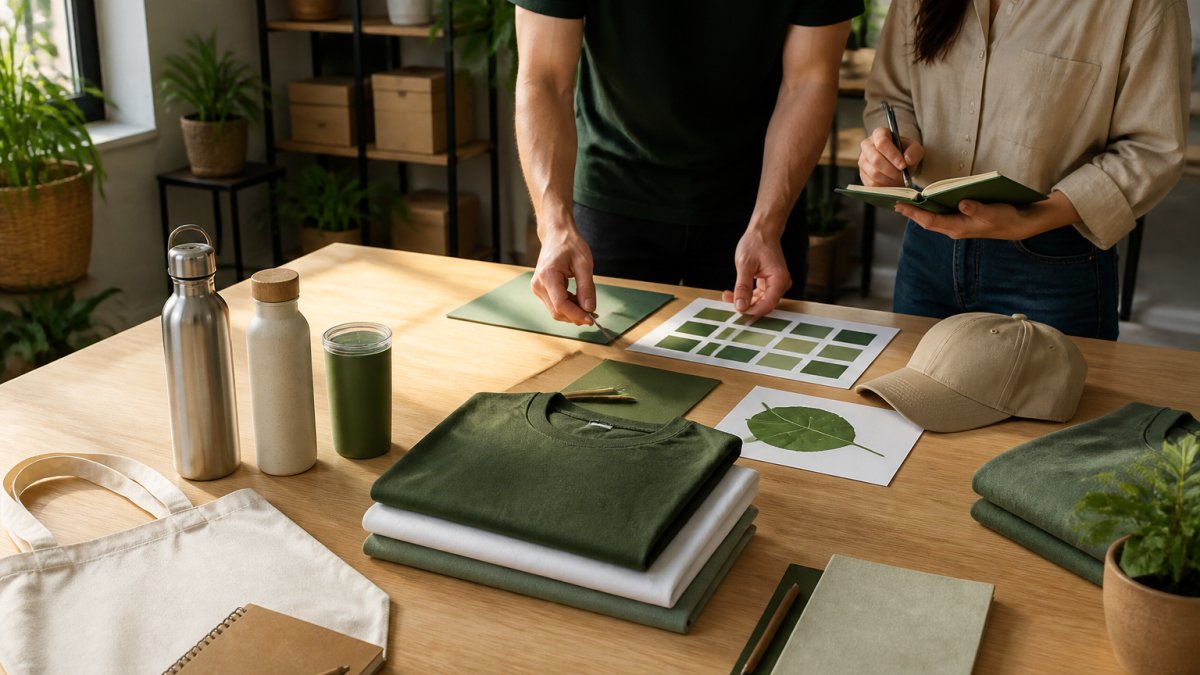
Sustainable trade show giveaways are items people keep because they replace something disposable. Reusable water bottles, cotton totes, and bamboo notebooks all fit. Responsible sourcing also means asking where materials come from and how items are decorated.
Look for suppliers who can speak to material content and print methods. Avoid single-use plastics that undercut the message. For a deep look at reusable drinkware, our bulk promotional water bottles guide covers options and sourcing.
Step 6: Use Giveaways to Drive Booth Traffic and Measure Results
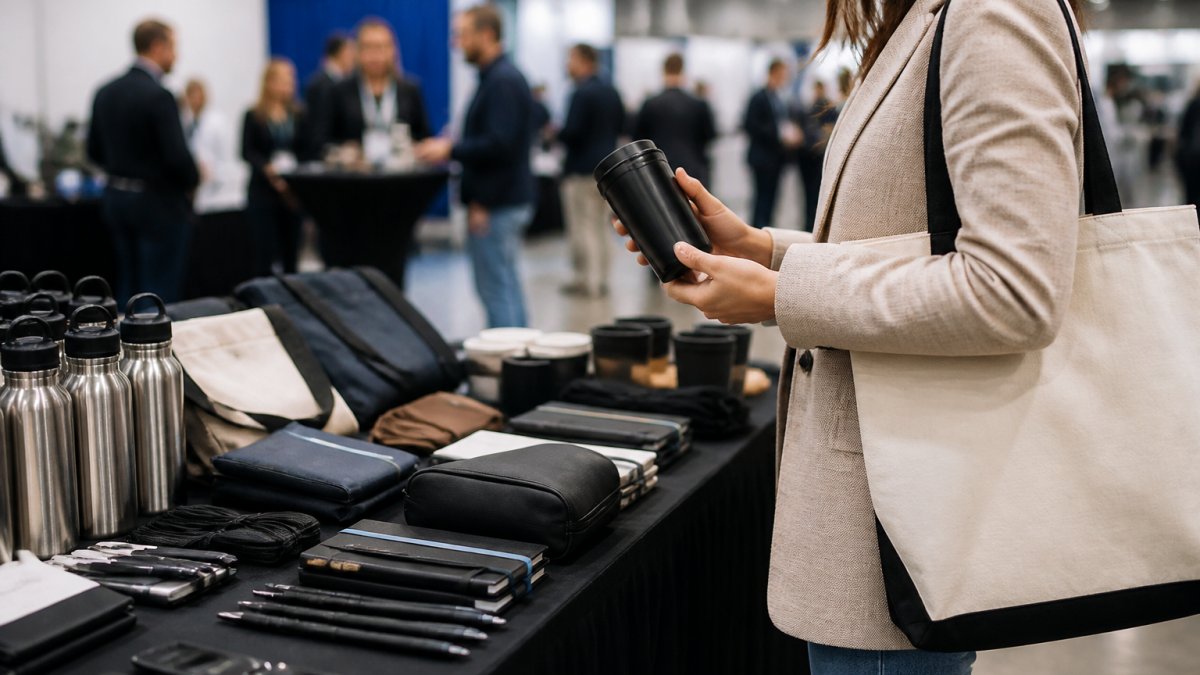
Giveaways drive booth traffic when they are tied to a clear call to action and a reason to stop. A branded item alone is not a draw; a branded item plus a specific offer is. The measurement side is where most exhibitors stop short, and it is where the real return is decided.
Turn the Giveaway Into a Traffic Mechanism
Design the handout so it creates a next step, not just a handoff:
- Tier the offer to the action. Reserve premium items for attendees who complete a qualifying action, such as a product demo, a scheduled follow-up, or a short needs conversation. Keep low-cost items for passersby so you do not burn premium inventory on people who are not in the market.
- Put a scannable path on the item. A QR code that leads to a landing page with a clear next step turns a handout into a trackable lead. Use a unique landing page per event so scans are attributable.
- Give the item a reason to be carried. Items that solve an on-floor problem, such as a tote for the bags attendees are already collecting or a bottle for a long show day, get used at the event and create visible brand presence on the floor.
- Train the booth team on the ask. The giveaway is the opener; the conversation is the conversion. Script a short qualifying question so every handout is tied to a lead record.
Measure Cost Per Qualified Lead, Not Cost Per Item
Cost per item tells you what you spent. Cost per qualified lead tells you what you bought. Calculate it as total giveaway spend (items plus decoration plus freight) divided by the number of qualified leads captured at the booth. A pricier item that produces real leads often beats a cheap item that produces none.
Build a simple event scorecard:
- Items distributed versus items ordered, to see how accurate your quantity forecast was.
- Scans or landing-page visits from the item's QR code.
- Qualified leads captured, defined in advance (for example, a completed needs conversation plus contact details).
- Cost per qualified lead, tracked against your target.
Connect the Giveaway to Follow-Up
The giveaway's job does not end at the booth. Reference the item in your follow-up message so the lead remembers the conversation, and route leads by qualification tier so your team follows up in priority order. For the full math, our guide on how to calculate promotional product ROI walks through the calculation. Follow up fast with every lead you capture.
Plan Your Next Giveaway Order With Logo Concepts & Printing
The challenge is simple: most giveaways get tossed because they were never designed to be kept. Fix the framework, the item choice, and the decoration, and your next order works harder.
Logo Concepts & Printing brings over 25 years of industry experience, expert in-house graphic design, and a vast selection of customizable items to every campaign. Our team is ready to help you with professional planning and creative execution.
Frequently Asked Questions
What makes a trade show giveaway worth keeping?
An item earns a spot in someone's bag or desk when it solves a small everyday problem and survives the trip home. Practical items like water bottles, notebooks, and tote bags get used repeatedly, which keeps your logo in view. Design details matter too: a clean logo placement, a size that fits in a pocket or bag, and a material that does not peel or fade after a few uses. If the item is fragile, oversized, or only useful on the show floor, it usually gets left behind.
How do I choose trade show giveaway ideas for my target audience?
Start with what your attendees do every day. Bank and investment firm visitors spend hours at desks, so notebooks and pens fit. Car dealership and construction audiences are on their feet and outdoors, so water bottles, hats, and durable tote bags work harder. Ask your sales team which items prospects have commented on at past events, then test two or three options at one show before committing to a larger order.
How much should I spend on a trade show giveaway budget?
Set the budget from your lead goal, not a flat per-item number. Decide how many qualified conversations you need, then divide your total giveaway spend by that number to get a cost per qualified lead. Many exhibitors split items into tiers: low-cost items like stickers and pens for general booth traffic, and premium items reserved for qualified leads. Pricing depends on quantity, decoration method, and delivery dates, so request a quote with your event date.
How many giveaways should I bring to a trade show?
Use historical show data first. If last year's event drew 2,000 attendees and you handed out 600 items, plan a similar quantity plus 10 to 15 percent as a buffer. When you have no history, check the event's expected attendance and assume you will reach a fraction of the floor. Keep a reserve of premium items for high-value conversations, and avoid shipping your entire order to the venue so you have stock for follow-up visits after the show.
Ready to make your next event count? Contact us today to plan a giveaway order that gets kept, used, and remembered.