 ultimate-guide
Bulk Screen Printing for Events: A Complete Planning Guide
Table of Contents
- Why Bulk Screen Printing Works for Event Branding
- Bulk T-Shirt Printing Turnaround Time: What to Expect
- Custom Event Apparel Design Tips That Drive Engagement
- How to Choose a Screen Printing Vendor for Your Event
- Event Branding Strategy With Custom Merchandise
- Managing Order Minimums, Pricing, and Production Capacity
- Bulk Screen Printing for Events: Common Questions
- Frequently Asked Questions
Last Updated: September 2, 2026
Why Bulk Screen Printing Works for Event Branding
Bulk screen printing for events creates memorable brand experiences while managing costs effectively. Custom apparel transforms attendees into walking ambassadors for your brand long after the event ends. The real advantage isn't just matching shirts, it's creating cohesive visual identity that reinforces your event's message. A team wearing identical branded gear signals professionalism and unity, while attendees become representatives of what you're building.
Logo Concepts & Printing has worked with event organizers across industries who discovered that bulk screen printing delivers measurable results: increased brand recall, encouraged social media sharing, and a sense of belonging among participants. The merchandise also serves as a tangible takeaway that attendees keep and remember your event by. The cost advantage is significant when you commit to volume, per-unit pricing drops dramatically as order quantities increase. A small run of 25 shirts costs far more per piece than an order of 500.
Bulk T-Shirt Printing Turnaround Time: What to Expect
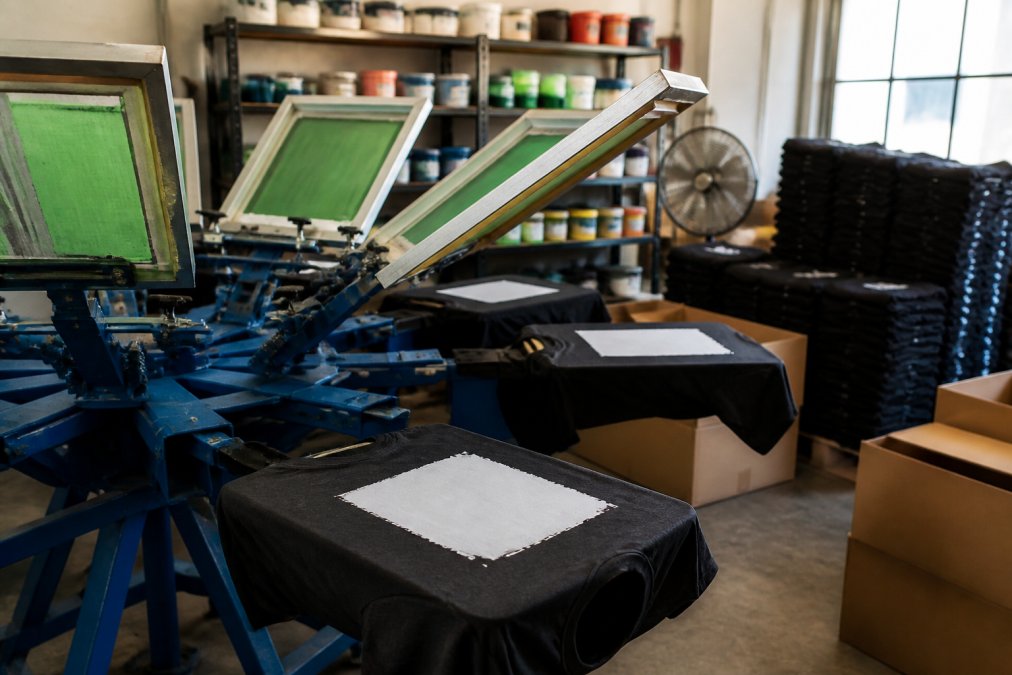
Bulk t-shirt printing turnaround time depends on order size, complexity, and urgency. Standard turnaround for bulk screen printing typically ranges from 10-15 business days for straightforward orders, including design setup, screen preparation, printing, quality checks, and packaging.
Rush orders are possible but come with trade-offs. Many providers, including Logo Concepts & Printing, offer expedited production, though rush services usually apply only to simpler designs and standard garment colors. Complex multi-color designs or specialty fabrics may not compress into rush timelines.
What actually affects your turnaround:
- Design complexity: Single-color prints are fastest. Each additional color adds setup time for screen separation and registration.
- Order quantity: Larger orders sometimes process faster because they justify dedicated production runs.
- Garment selection: Standard blank apparel prints faster than specialty items or performance fabrics.
- Shipping destination: Local pickup is fastest. Regional shipping adds 2-3 days; cross-country adds 5-7 days.
The mistake most event planners make is underestimating setup time. Screens must be burned, color mixing happens, and test prints run before full production begins. If your event is three weeks away, order now. Two weeks out, you're in rush territory. One week out, you're likely too late for bulk screen printing, consider heat transfer or direct-to-garment printing instead.
Custom Event Apparel Design Tips That Drive Engagement
Custom event apparel design balances brand visibility with wearability. If your design is too corporate or overly complex, people won't wear it after the event. If it's too subtle, it defeats the purpose. The sweet spot is professional but wearable.
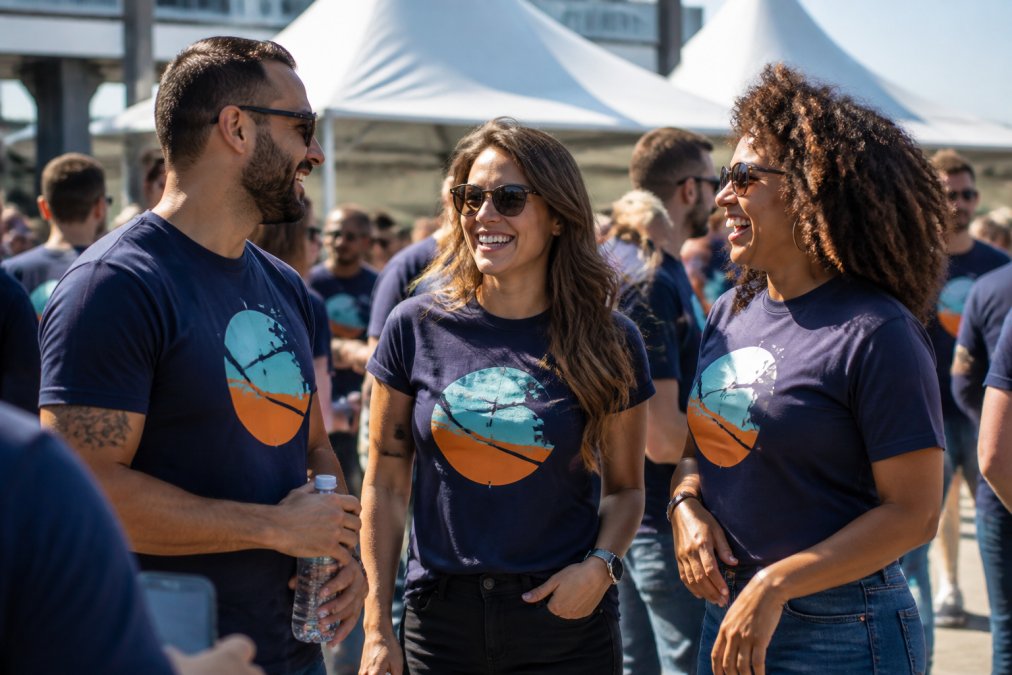
Start with placement strategy. Front chest logos are traditional and visible in photos. Back prints create impact when worn casually. Sleeve prints add visual interest without overwhelming the garment. A small, detailed logo works on the chest; a larger, bold logo might dominate, move it to the back.
Color selection matters significantly. Your event colors should complement the garment base color. A dark navy logo on black becomes invisible; a bright logo on light gray pops in photos. Consider where the apparel will be worn and photographed.
Typography deserves attention. Thin, delicate fonts don't reproduce well in screen printing. Bold, clean fonts survive the process and remain legible. Avoid trendy fonts that will date your merchandise. A timeless sans-serif typeface works across years.
Include the year, event name, and a memorable tagline or visual element. This transforms a generic branded shirt into a keepsake that commemorates a specific moment. Limit your color palette to three or four colors maximum, each color requires a separate screen, increasing costs and complexity.
How to Choose a Screen Printing Vendor for Your Event
Start by assessing production capacity. Can they handle your order quantity on your timeline? Match vendor capacity to your actual requirements.
Quality consistency is non-negotiable. Request samples of previous work in similar quantities and complexity. Look for even ink coverage, sharp registration, and no bleeding or fading. A vendor should guarantee their work.
Communication and revision process matter significantly. Ask how many design revisions are included before production starts. A good vendor provides mockups for approval before printing and catches errors before screens are burned. Logo Concepts & Printing provides in-house graphic design services and mockups to ensure everything is approved before production starts, preventing costly reprints.
Pricing transparency is essential. Get a detailed quote breaking down setup fees, per-unit costs, and rush charges. Understand what's included in the base price and what costs extra.
Ask about their approach to sustainability. Water-based inks and eco-friendly practices are becoming standard in quality print shops. Check their track record with similar events, vendors experienced with conference merchandise or product launches understand event timeline pressures.
Event Branding Strategy With Custom Merchandise
Event branding strategy with custom merchandise works best when the apparel supports a larger narrative about your event. The shirt is a tool that extends your event's reach beyond the physical gathering.
Define what emotion or message you want attendees to associate with your event. Your merchandise design should reinforce that message visually. Plan how merchandise fits into the attendee experience, will everyone receive a shirt, or will it be earned? The distribution strategy affects both inventory planning and perceived value.
Consider post-event visibility. Your goal is for attendees to wear this apparel in regular life, extending brand exposure. A shirt that screams "ANNUAL CONFERENCE 2026" might not get worn publicly. A shirt with your brand logo and an event-specific date on the sleeve is wearable year-round.
Social media amplification is built into merchandise strategy. Encourage attendees to post photos wearing the apparel and create an event hashtag. Merchandise becomes content when attendees share it online, multiplying your event's reach.
Merchandise also serves as a conversation starter. Someone wearing your event apparel becomes a brand ambassador. This is why quality matters, cheap, poorly-made apparel damages your brand reputation every time it's worn.
Plan inventory strategically. Over-ordering wastes budget; under-ordering creates negative experiences. Work with your vendor to forecast realistic quantities based on expected attendance, building in a small buffer (10-15%) for contingencies.
Managing Order Minimums, Pricing, and Production Capacity
Order minimums in bulk screen printing typically range from 24 to 100 units depending on the vendor. These minimums exist because screen setup costs are fixed, spreading that cost across more units makes per-unit pricing reasonable.
Pricing scales non-linearly. Your first 50 units might cost $12 per shirt; your next 100 might drop to $8; your next 500 might be $5. Always ask for a detailed quote across multiple quantity levels to see actual cost differences.
Setup fees are separate from per-unit costs and vary by vendor, typically ranging from $25 to $75 per color. A one-color design means one setup fee; a four-color design means four. Simplifying your design saves money.
Garment selection affects pricing significantly. Basic 100% cotton t-shirts are baseline pricing. Performance fabrics, premium blends, or specialty items cost more. Rush production typically adds 20-40% to base price.
Ink color selection impacts cost differently than expected. Standard colors (black, white, navy, red) are baseline pricing. Specialty colors (metallic, neon, discharge inks) cost more. Production capacity constraints matter during peak seasons, summer is busy for event merchandise. Book early and expect longer lead times or premium pricing.
Minimum order requirements can sometimes be negotiated, especially if you're willing to accept longer lead times or limited color options.
Bulk Screen Printing for Events: Common Questions
What file formats do I need for my design?
Vector artwork (Adobe Illustrator files, EPS, or PDF) is ideal for screen printing. Vector files scale without losing quality and provide clean, sharp lines. Raster images (JPEGs, PNGs) can work but must be high resolution (300 DPI minimum). Avoid low-resolution images from the web.
Can I print on different colored garments in the same order?
Yes, but it affects pricing and complexity. Printing the same design on multiple garment colors requires separate production runs or careful color management. Ask your vendor about their approach and whether bundling colors saves money.
What's the difference between screen printing and other printing methods for events?
Screen printing excels at high-volume, cost-effective production with vibrant colors and durability. Direct-to-garment (DTG) printing handles complex, photo-realistic designs but costs more per unit. Heat transfer printing is faster but less durable. Embroidery adds premium feel but is slower and more expensive. For bulk event merchandise, screen printing remains the standard.
How do I ensure consistent sizing across my order?
Provide a detailed size breakdown when you place your order. Work with your vendor to confirm garment sizing charts, as different manufacturers size differently. Request a sample in your most common size before full production.
What if I need to make design changes after production starts?
This gets expensive. If screens have been burned and production begun, stopping to make changes means scrapping work and starting over. Get everything finalized and approved before production begins. Build in a review buffer to catch issues early.
Can I order different designs in a single bulk order?
Yes, but each design requires separate screens and production setup. This increases complexity, setup fees, and turnaround time. Consolidating to a single design keeps costs lower and production simpler.
What happens if the quality isn't what I expected?
Reputable vendors stand behind their work. If ink fades prematurely, registration is misaligned, or coverage is uneven, they should offer reprints or refunds. Get specifics about their quality guarantee in writing before ordering.
Event merchandise is one of the most underutilized marketing tools available. A well-executed bulk screen printing project creates tangible brand touchpoints that attendees keep and wear, extending your event's impact far beyond the event date itself.
The complexity comes down to planning. Clarify your timeline, finalize your design, choose a vendor that matches your capacity needs, and build in buffer time for revisions. Logo Concepts & Printing brings over 25 years of experience to this challenge. Our in-house design team, access to thousands of garment options, and proven track record with event campaigns means your merchandise gets handled by people who understand event urgency and quality standards. Whether you need custom design services, rapid turnaround, or strategic guidance on merchandise that drives engagement, contact us today to discuss your event needs.
Frequently Asked Questions
Is it cheaper to order bulk screen printing compared to small quantities?
Yes. Bulk screen printing reduces per-unit costs significantly because setup fees and production overhead are spread across larger quantities. The more you order, the lower your cost per shirt. Most providers offer tiered pricing that rewards larger orders. However, total cost depends on quantity, garment type, ink colors, and design complexity. Request a quote from your vendor to see exact savings for your event size.
How far in advance should I order bulk screen printed apparel for an event?
Plan to order 4-6 weeks ahead for standard turnaround, though rush options exist. Lead time depends on order size, design complexity, garment availability, and your vendor's current capacity. Rush jobs typically cost more. If your event is sooner, contact your screen printing vendor immediately, many can accommodate 2-3 week turnarounds for rush fees. Always confirm production and shipping timelines before committing to an event date.
What factors influence the cost of bulk screen printing for events?
Cost depends on order quantity, garment type and quality, number of ink colors, design complexity, turnaround speed, and shipping distance. Setup fees apply per design, so larger orders lower per-unit cost. Eco-friendly or specialty inks may cost more. Fabric choice affects price, basic cotton costs less than premium blends. Rush turnarounds add fees. Get itemized quotes that break down per-unit cost, setup, and shipping so you understand where your budget goes.
What's the difference between screen printing and other apparel customization methods?
Screen printing uses mesh screens and ink to apply designs directly to fabric, offering vibrant colors, durability, and cost efficiency for bulk orders. Embroidery stitches designs onto garments, more premium but slower and costlier per unit. Heat transfer applies pre-printed designs via heat and pressure, good for small runs but less durable. Direct-to-garment (DTG) printing works like inkjet printers, best for detailed, multi-color designs on small quantities. For bulk event apparel, screen printing offers the best balance of speed, cost, and durability.